

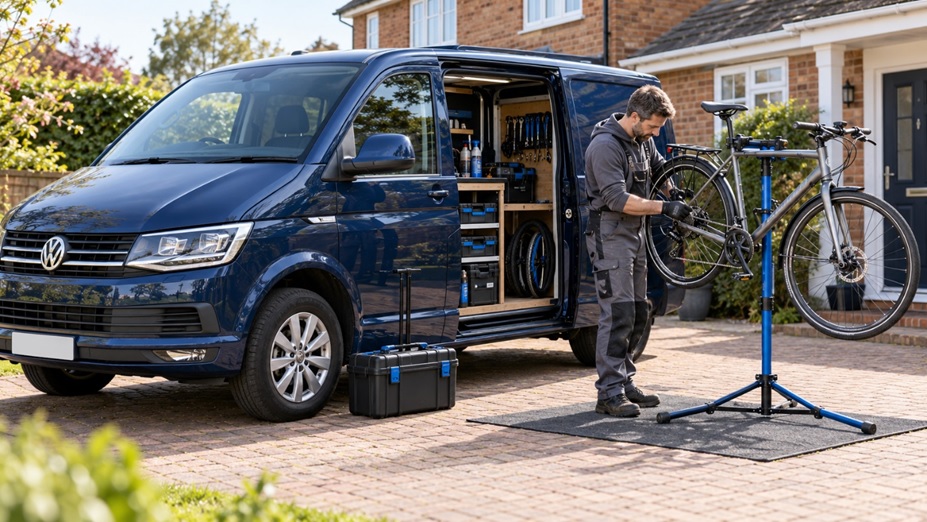
The customer stays at home while the workshop comes to their driveway. That is the appeal behind businesses ranging from mobile bicycle repairs to furniture restoration and equipment servicing. For an owner exploring a VW Van lease, the vehicle becomes central to that promise. It must transport the tools, support an efficient appointment and leave enough room for everything collected along the way.
Planning this kind of vehicle starts with a service description. Before choosing a model or discussing the finish, write down what happens between arriving at a customer’s address and leaving it.
That description becomes the brief against which every vehicle decision can be checked.
The Brief: A Repair Business Without a Fixed Workshop
Consider a hypothetical mobile bicycle mechanic. Customers book routine servicing at home or at their workplace. The mechanic carries tools, commonly used parts and a portable repair stand.
Most work takes place outside the van. Some bicycles occasionally need transporting elsewhere for more involved repairs.
This simple description already establishes several requirements. The vehicle needs accessible tool storage, room for the folded stand and an arrangement that can accommodate a bicycle without dismantling the entire interior.
It also reveals what may be unnecessary. If repairs take place outside, the business may have little use for a permanent internal workbench that occupies valuable floor space.
Other mobile services will produce different answers. The exercise works because it begins with the appointment rather than an imagined conversion.
Design Around the First Five Minutes
Arrival is a useful place to look for wasted effort.
A mobile operator might need to find parking, introduce themselves, assess the job and set out equipment before chargeable work begins. An awkward vehicle layout can add several unnecessary steps.
Imagine retrieving a repair stand from behind three boxes at every appointment. Rearranging those boxes once may seem trivial. Repeating it throughout a busy week becomes frustrating.
Place the equipment needed first where it can be reached first. Consider which door provides suitable access at typical destinations and how much space is needed around it.
Keep the arrangement workable when parked legally and safely. A layout that depends on spreading equipment across a pavement or opening doors into passing traffic needs rethinking.
Choose the Space the Service Actually Uses
A mobile business needs room for its standard equipment and the variations that occur regularly.
For the bicycle mechanic, that could mean leaving space for an unexpected collection. For a furniture repairer, it might involve carrying replacement materials without damaging finished pieces.
Check the usable dimensions of the exact Volkswagen van being considered. Include the space lost to storage, lining and any proposed fittings.
Weight needs its own assessment. Tools, spares, accessories and occupants all contribute to the finished load. Confirm the relevant limits for the specific derivative rather than judging capacity from empty floor space.
When enquiring through www.SwissVans.com, describe the standard appointment and the largest regular exception. This gives the supplier something concrete to discuss.
Keep the First Fit-Out Deliberate
It is tempting to commission every storage idea before the first customer booking. A more measured approach can leave room to learn.
Begin with a suitable, secure arrangement for the equipment you know you need. Seek professional advice where installations involve structural fixings, electrical systems or specialist equipment.
Confirm the leasing provider’s permissions before fitting accessories or making alterations. Ask what must happen to those fittings when the agreement ends.
Then record how the setup performs. Which drawers are opened most? What repeatedly gets moved? Which spare parts are carried but never used?
A few weeks of actual appointments can provide a better basis for refinements than an elaborate layout designed without working experience.
Plan for Appointments That Do Not Go Smoothly
A mobile service has to cope with more than the ideal booking.
Rain may prevent outdoor work. A customer may have no suitable parking. A repair may require an unstocked component, or a collected item may occupy space needed for the next appointment.
Write a short response for each likely disruption. Decide when work is postponed, when an item is collected and where equipment can be stored securely overnight.
If the service needs power, establish a suitable supply arrangement instead of assuming the customer can provide it. Any installed system should be designed and fitted appropriately.
These decisions help define the vehicle requirement. They also make booking information clearer for customers.
Make Presentation Support the Service
A tidy van can help customers identify the business and understand why it has arrived.
Keep any permitted signage readable. A business name, a clear service description and a useful contact method are often more practical than crowded graphics.
Inside, organisation matters more than decoration. Clean equipment, protected customer property and a consistent packing routine contribute directly to the appointment.
Check signage permissions and removal requirements before commissioning graphics for a leased vehicle.
Review the Van Through Completed Jobs
Once the service is running, measure the details that affect the working day: setup time, return visits, collection journeys and jobs postponed because of vehicle limitations.
Use those records alongside actual mileage when reviewing whether the arrangement still fits. Ask the provider about any proposed agreement changes rather than assuming they are available.
The best mobile-service setup allows the operator to arrive prepared, carry out the booked work and pack away efficiently. Choosing the van around that sequence gives the business a useful working tool from its first appointment onwards.

Comments are closed.